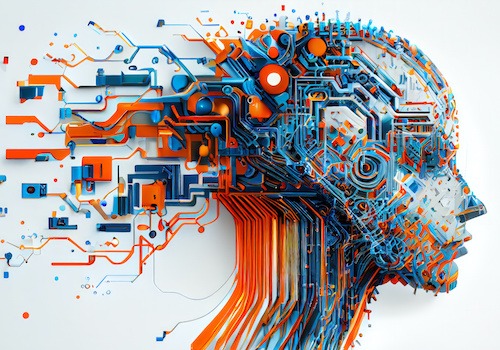
Artificial Intelligence is no longer a futuristic concept reserved for research labs and tech giants. In 2026, AI has quietly become part of daily workflows across industries. From marketing teams using AI to draft campaigns, to finance professionals leveraging predictive models, the shift is already happening.
The real question is not whether AI will change work. It already has. The real question is whether you’re adapting fast enough.
The Silent Integration of AI
Unlike previous technological revolutions, AI hasn’t arrived with loud announcements. It has embedded itself inside existing tools.
You don’t “use AI” separately anymore. It’s inside:
- Email platforms suggesting responses
- CRMs predicting customer behavior
- Accounting software automating reconciliation
- HR tools screening resumes
- Design platforms generating visuals
AI is becoming infrastructure.
And infrastructure changes how work gets done.
Tasks Are Changing, Not Just Tools
Many people fear job replacement. But history shows that technology eliminates tasks more often than entire professions.
ATMs did not eliminate banks. They changed what bank employees focus on.
Spreadsheets did not eliminate accountants. They increased their analytical capacity.
Similarly, AI is:
- Automating repetitive documentation
- Reducing manual data entry
- Assisting with research
- Drafting first versions of content
This shifts human focus toward higher-value responsibilities.
The Rise of “AI-Augmented” Professionals
The professionals gaining the most advantage are not the ones resisting AI. They are the ones integrating it.
An AI-augmented marketer:
- Tests campaigns faster
- Analyzes data more efficiently
- Produces content at scale
An AI-augmented analyst:
- Identifies trends quickly
- Builds models faster
- Generates reports in minutes instead of hours
The competitive gap will widen between those who adapt and those who don’t.
New Skills That Matter
As AI handles routine tasks, certain human skills increase in importance:
1. Critical Thinking
AI provides outputs. Humans evaluate them.
2. Strategic Decision-Making
AI can suggest patterns, but it cannot align decisions with long-term vision.
3. Communication
Explaining complex insights clearly remains a human advantage.
4. Ethical Judgment
AI does not carry accountability. Humans do.
The future workforce will reward people who combine technical fluency with strong cognitive and interpersonal skills.
Industries Most Affected
Some sectors are experiencing faster transformation:
- Marketing: Automated ad optimization and content generation
- Finance: Predictive analytics and fraud detection
- Customer Service: Chatbots and intelligent routing
- Healthcare: Diagnostic support systems
- Software Development: AI-assisted coding
The common pattern is efficiency enhancement.
The Risk of Standing Still
Technology adoption is rarely optional in competitive industries.
Organizations that resist AI integration may face:
- Higher operational costs
- Slower decision cycles
- Reduced productivity
At an individual level, ignoring AI tools can make your output appear slower compared to peers.
The market rewards efficiency.
The Balanced Perspective
AI is powerful. But it is not autonomous ambition.
It requires:
- Proper prompts
- Data quality
- Human oversight
- Strategic direction
Blind reliance creates errors. Intelligent integration creates leverage.
What You Should Do Now
If you’re a student or professional, practical steps include:
- Learn how AI tools relevant to your field work
- Experiment with automation in small tasks
- Improve data literacy
- Focus on problem-solving skills
You don’t need to become a machine learning engineer.
You need to become comfortable working alongside intelligent systems.
The Bottom Line
AI is not coming for your career.
It’s coming for inefficiencies.
The professionals who treat AI as a collaborator rather than a threat will outperform those who fear it.
The workplace of 2026 belongs to the adaptable.


Leave a Reply